

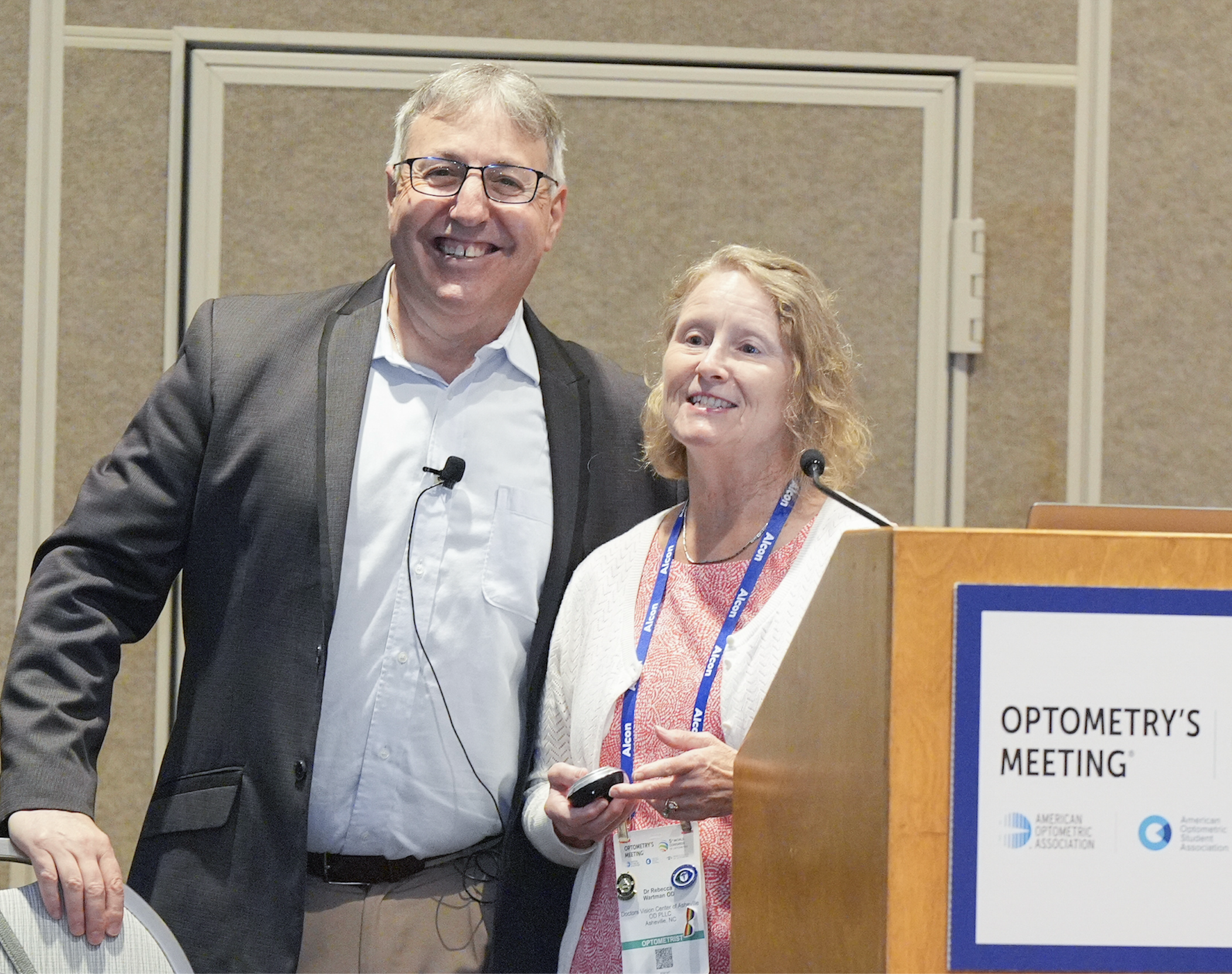
In their presentation at Optometry's Meeting 2026 in Phoenix, Rebecca H. Wartman, OD, and Harvey Richman, OD, highlighted how optometrists can incorporate remote monitoring into their practice and shared new codes and guidance for the appropriate use of remote physiological monitoring (RPM) and remote therapeutic monitoring (RTM).
Prior to investing in any remote monitoring process, Dr. Wartman said optometrists should “first understand the rules and the appropriate CMS-acceptable applications, then understand the appropriate coding to ensure your policies align with the intent of CMS for this technology.”
Dr. Richman added that understanding the difference between RPM and RTM is important. “RPM measures objective physiological metrics (eg, heart rate, blood sugar) using automated, connected medical devices. Patient self-reporting is not allowed,” he explained. “RTM gathers nonphysiological data related to therapeutic treatments. This includes medication adherence, musculoskeletal range of motion, and subjective pain levels, which can be manually self-reported by the patient.”
He further explained that it is important to assess the value of any technology for your practice and patients’ needs. “Just because it sounds good or promotes increased reimbursement doesn’t mean that it is appropriate for the care that you intend,” he said. He then presented a checklist of components for optometrists to follow for remote monitoring.
3 Main Components of Remote Monitoring
1. Education and setup. Education about how to use the device and transmit the health data helps ensure that patients use the device appropriately to collect accurate data.
2. Device supply. The internet-connected device, including the collection and transmission of at least 2 readings every 30 days, ensures that the optometrist gets the appropriate health information. Examples of these devices include connected blood pressure cuffs, weight scales, and pulse oximeters. Without the connected device or an adequate number of readings, the optometrist may be left with insufficient or no data to make informed treatment decisions.
3. Treatment and management. Treatment management ensures that the optometrist reviews the health data and uses it to manage the patient’s condition.
Key 2026 RTM CPT Codes
“Remote monitoring is becoming increasingly important and utilized, and CMS is watching closely to ensure that all use is appropriate,” said Dr. Wartman. “No optometrist wants to get into difficulty because of an audit.”
As such, Dr. Wartman and Dr. Richman presented key 2026 RTM CPT codes, along with explanations of their use:
- 98975: RTM (eg, therapy adherence, therapy response, digital therapeutic intervention) initial set-up and patient education on use of equipment.
- 98979: RTM treatment management services; the first 10 minutes of clinician time in a calendar month.
- 98980: RTM treatment management services; first 20 minutes of clinician time in a calendar month.
- 98981: RTM treatment management services; each additional 20 minutes of clinician time (billed as an add-on to 98980)
Dr. Richman then discussed how to apply the codes in optometry practices. “There are only a few instances at this time that optometry can truly meet the requirements of this process now,” he explained. “Currently, a few amblyopia management options exist and there are some glaucoma and retina technology that does provide data that the optometrist can review and provide management options on. Beyond the devices that currently provide therapeutic feedback, the best option would be an appropriate Evaluation and Management code.”
Dr. Wartman and Dr. Richman then provided examples of RTM and RPM.
An Example of Remote Therapeutic Monitoring
- A Medicare patient has high blood pressure (hypertension).
- The patient’s provider determines that the remote patient monitoring is medically necessary to treat his hypertension, and the patient consents to getting it.
- The provider supplies a connected blood pressure cuff to the patient.
- The provider educates the patient on how to set up and use the connected blood pressure cuff.
- The patient regularly uses the device to connect his blood pressure readings, and the device automatically transmits the data to his provider.
- The provider then reviews the data, makes decisions about the patient’s treatment, and communicates with the patient. For example, the provider may decide that the patient’s blood pressure medication needs to be adjusted and calls the patient to make this change.
An Example of Remote Physiological Monitoring
Glaucoma Monitoring with a Home Intraocular Pressure (IOP) Device
Scenario:
-
A patient has glaucoma or ocular hypertension.
-
The optometrist determines that frequent IOP monitoring is medically necessary.
-
The patient is provided with a FDA-cleared home tonometry device (such as a home-use rebound tonometer).
-
The patient measures their eye pressure daily.
-
The device automatically transmits IOP readings to the optometrist.
-
The optometrist reviews trends and adjusts treatment if pressures are elevated.
“The use of remote monitoring can aid in patient management while reducing the amount of real, in-person chair time that can be required to care for patients,” concluded Dr. Wartman. “Remote monitoring is more convenient for patients, and ODs gain a better understanding of a patient's responses to therapy. It’s a win-win.” OM