
For many years, this space was nurtured by Dr. Susan A. Resnick. It is my sincere honor to pick up the mantle.
Introducing specialty contact lens (CL) services from the beginning of opening my cold-start practice in 2021 allowed me to differentiate the practice from others in a suburban market that has multiple established competitors. I readily admit that I had a built-in advantage having fit these CLs for many years at an OD/MD practice. What I could not have predicted is that combining these services with a small, family-centered private practice would cause an explosion in the practice’s popularity.
Specifically, offering specialty CLs has become a major driver of referrals from neighboring optometrists and ophthalmologists. Therefore, this column highlights the practical considerations for the related equipment investment, choosing specialty CL manufacturers, and clinical workflow, so you, too, can benefit from offering specialty CLs.
Equipment Investment
The practice’s initial equipment purchases were a corneal topographer, anterior segment imaging technology, and dry eye disease (DED) diagnostic tools. This is because they support both medical and specialty-lens services.
Since this was a cold-start practice, I prioritized low-cost investments, such as vital dyes, but also valued equipment that could provide a combination of scans. For example, my corneal topographer also performs meibography.
Fitting scleral CLs became a natural extension of the medical eyecare services I provide, especially for DED patients who had postsurgical corneal irregularities, or keratoconus.
Common Codes for Specialty CL Fits
- The best coding resources are generally found at gpli.info.
- The most common codes utilized are 92072 (fitting for keratoconus), 92313 (fitting of a corneoscleral lens), 92311 (aphakia, one eye) and 92312 (aphakia, both eyes).
- Material codes that are most often utilized are V2510 (corneal RGP), V2511 (RGP toric), V2512 (RGP bifocal), V2531 (scleral lens), and V2599 (unspecified - typically utilized for hybrid lenses)
Choosing Manufacturers
Our criteria for establishing relationships with specialty CL manufacturers was that they provide hands-on training, diagnostic fitting sets, and marketing materials to help me explain to patients the specific benefits of each offering. Developing these relationships early reduced our learning curve and helped standardize fitting processes. I recommend my OD colleagues begin forging these relationships prior to opening. Visiting the manufacturers at trade shows is a great way to introduce yourself.
Clinical Workflow
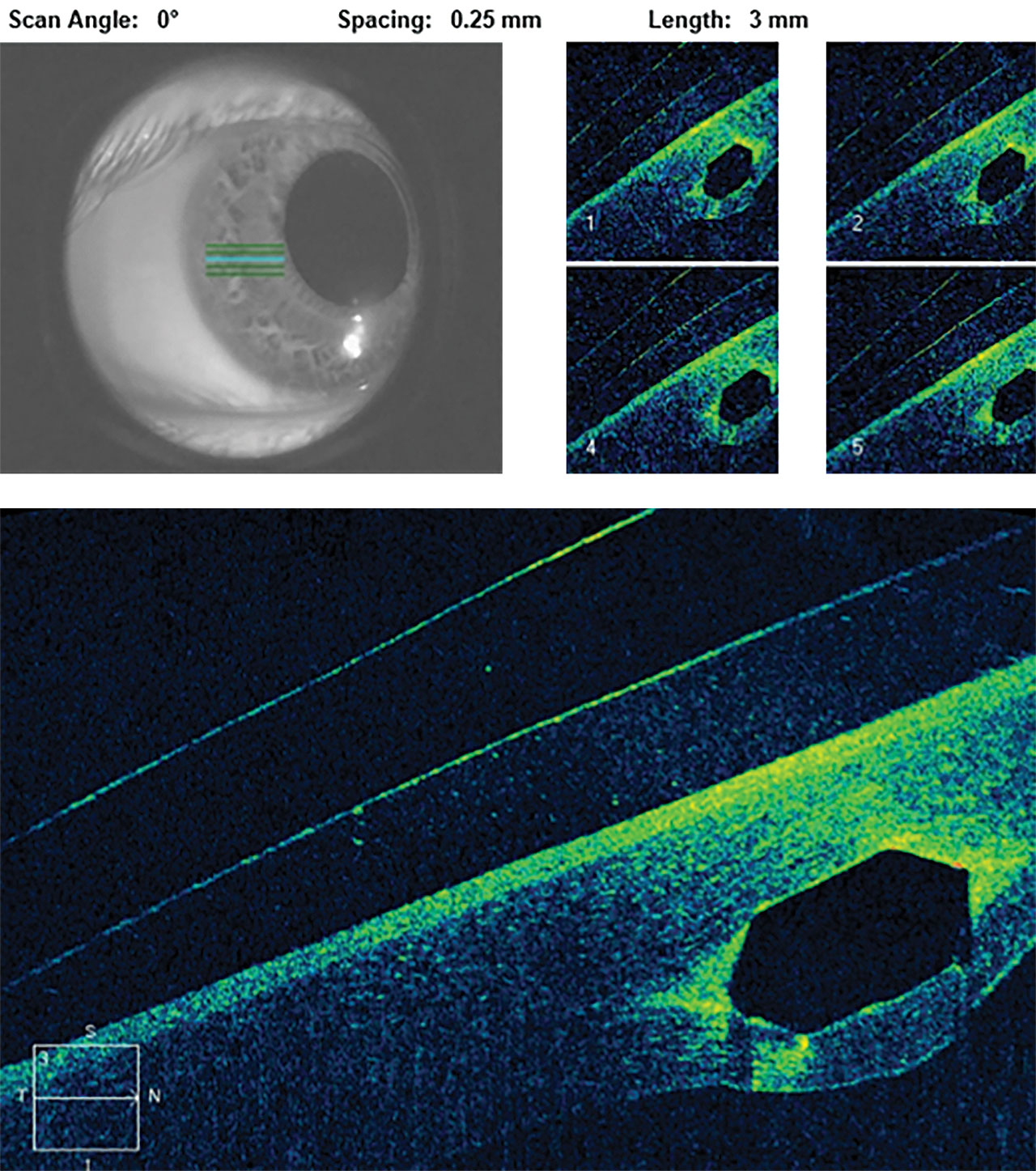
The key to maximizing clinical workflow when offering specialty CLs is utilizing staff. At a basic level, the staff must understand the lenses offered, the length of appointment that will be required, and the expected number of fol-low-up visits. Additionally, staff can perform topography and OCT scans, as well as provide insertion and removal training to patients.
How My Love of CLs Began
I developed a love of contact lenses early on in my optometric education. But interestingly enough, I took a rather circuitous route. My residency was in ocular disease and I only began fitting specialty lenses because my previous place of employment desperately needed someone to manage the refractive needs of a large number of irregular cornea patients. Once I began seeing the impact I was having on the visual outcomes of these patients I was hooked. The cases can be very challenging—and there are days where I feel the weight of the trust that the patient has given me. But 15 years into clinical practice I cannot imagine doing it any other way.
Building a Sustainable Foundation
At Infinity Eye Care, the decision to focus on specialty lenses wasn’t just about expanding services—it was about defining our clinical identity. By emphasizing customized care and problem-solving, the practice built a foundation for sustainable growth and professional fulfillment that continues to shape the practice today. OM