
In the previous issue of Optometric Management, Dr. Janelle Davison wrote a feature article called, “Offering Ocular Aesthetics.” In this article, she discussed patient demand, her recommended service menu, and office space, among other considerations. Her well-written article inspired me to use this month’s column to discuss the 3 action steps I’ve used to successfully add aesthetic revenue streams to the dry eye disease (DED) portion of my practice.
Acquiring Education
Getting education for yourself is the first step. To obtain this education, I recommend seeking courses related to aesthetics and the eyes. You can find hands-on learning sessions at the major optometric meetings.
Additionally, you want to take into account the primary complaints of this patient population, so you can best meet their needs.
At my practice, for example, I find that the 3 primary complaints are (1) red eyes, (2) festoons, and (3) dark circles. As a result, I have sought a great deal of education regarding treating these complaints.
Once educated on how, specifically, you can help your aesthetic patients, it’s time to translate this education to them. Personally, I broach the subject by explaining that it’s incredibly important to minimize the toxins found in eye-related cosmetics to maintain healthy eyes. To emphasize this point, I mention the Tear Film & Ocular Surface (TFOS) Society’s Lifestyle Workshop report, which reveals over 6 dozen toxins found in these products and how, specifically, they affect eye health. (You can find the report at: www.tearfilm.org.) Additionally, I provide handouts that contain the names of eye-safe products and best practices for their use to my cosmetic product-wearing patients.
Offering Over-the-Counter Products
The patient education I provide dovetails nicely into informing patients that my practice offers eye-safe over-the-counter cosmetic products, such as eye makeup remover and mascara. Companies that offer eye-safe cosmetic products include: Bausch + Lomb, Daily Practice by Dr. B, Eyederm Cosmetics, Eyes Are the Story, Optase, Twenty/Twenty Beauty, We Love Eyes, and You & Eye By Dr. Nicky.
Providing In-Office Procedures
Some in-office treatment devices, such as intense pulsed light and radiofrequency, can treat DED and provide aesthetic benefits, such as photorejuvenation and collagen stimulation, respectively. Therefore, it makes sense to consider having such technologies on hand.
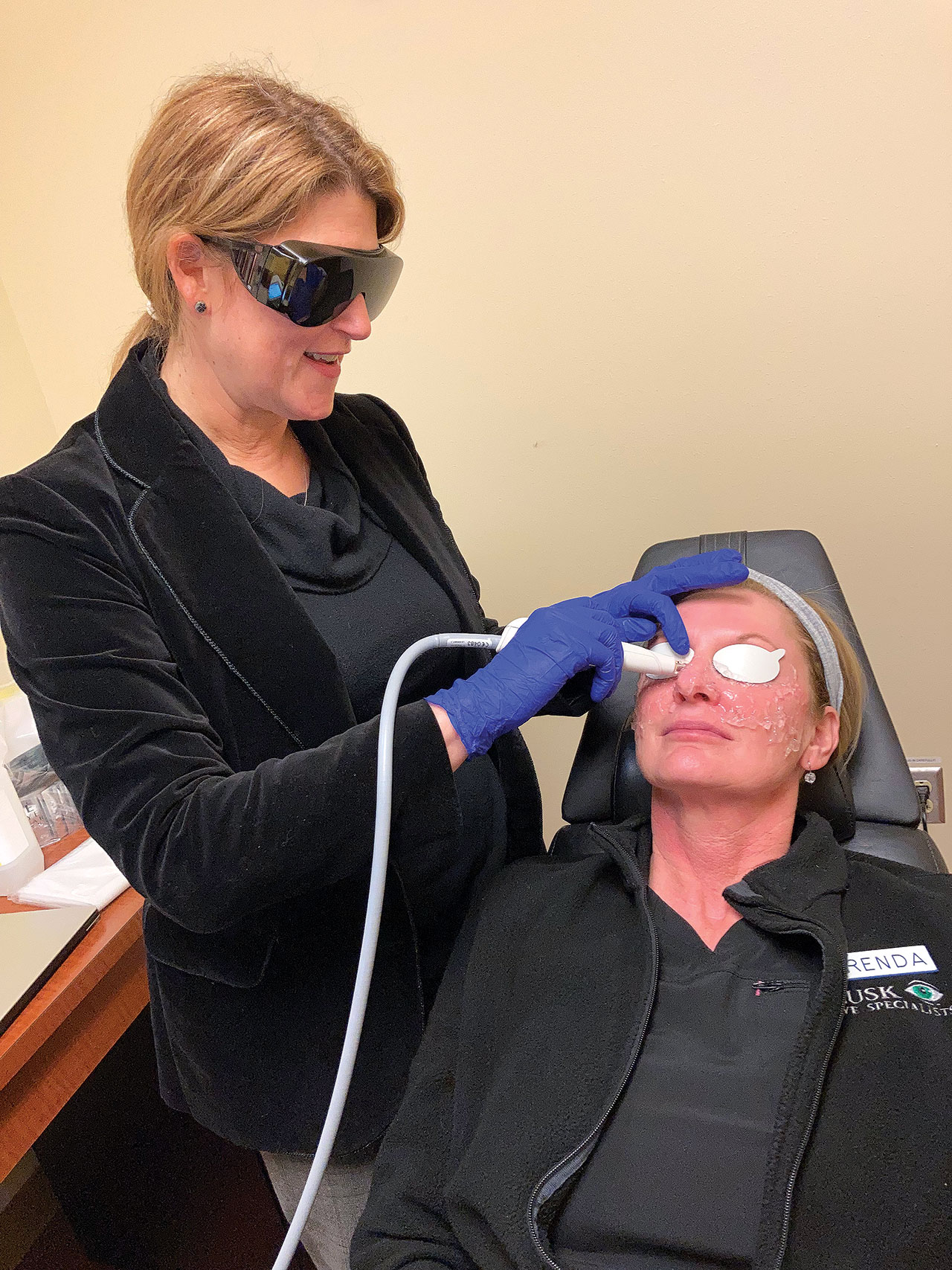
To facilitate their implementation, I recommend utilizing manufacturer training and making use of staff members, as you are practicing. Trust me! They’ll be eager to share their experiences with patients too.
Pro tips: For marketing purposes, ask staff for permission to use their “before and after” treatment photos to show patients. Also, make sure to link the specific benefit of the treatment technology to the prospective patient’s complaint—“your eyes will be clearer and less red—vs “You’ll experience enhanced meibomian gland secretion.’” OM