


A while back, a staff member sent me a meme that said, “It’s too peopley in here.” Recently, I thought about that meme when the office phone rang incessantly, and patients filled every exam room, while several others were in the optical.
A clinic setting can sometimes be a controlled chaos of crowds—patients needing care, consumers expecting solutions, and staff needing guidance. I have found that the pressure from crowding can create an “always on” mentality that erodes presence and creativity: Crowds demand energy. Good crowds give energy back. But unmanaged crowds can drain it.
So, what do crowds have to do with clinic settings?
Changing the Environment
Last fall, my husband and I and friends traveled to Croatia, as I discussed in my previous column. Many times, during this trip, I found myself saying, “I’m so glad we’re not here at the height of tourist season. The crowds would drive me crazy.”
It was, however, still busy in some places. To combat the pressure from crowding, we sought quiet space in a park, took a bike ride in the countryside, or moved to a spot to watch the ocean waves.
Why? The very things crowds drain from us—clarity, calm, connection—can be replenished in nature. In fact, numerous studies show that time spent in natural spaces reduces cortisol levels, improves focus, and helps restore mental fatigue.1,2,3
I have found that all the things that people talk about with burnout can be alleviated with nature. Recognizing this, I also applied a change in environment to the clinical setting to help instill a sense of calm for our employees.
Finding Nature in Clinic Settings
Even small acts—like walking outside between seeing patients, opening windows, and/or positioning workspaces near natural light—can create psychological resets. By designing our offices to have spacious windows, reducing clutter, and adding a low-light-loving plant like a peace lily, we can foster a sense of nature and calm in our office.3
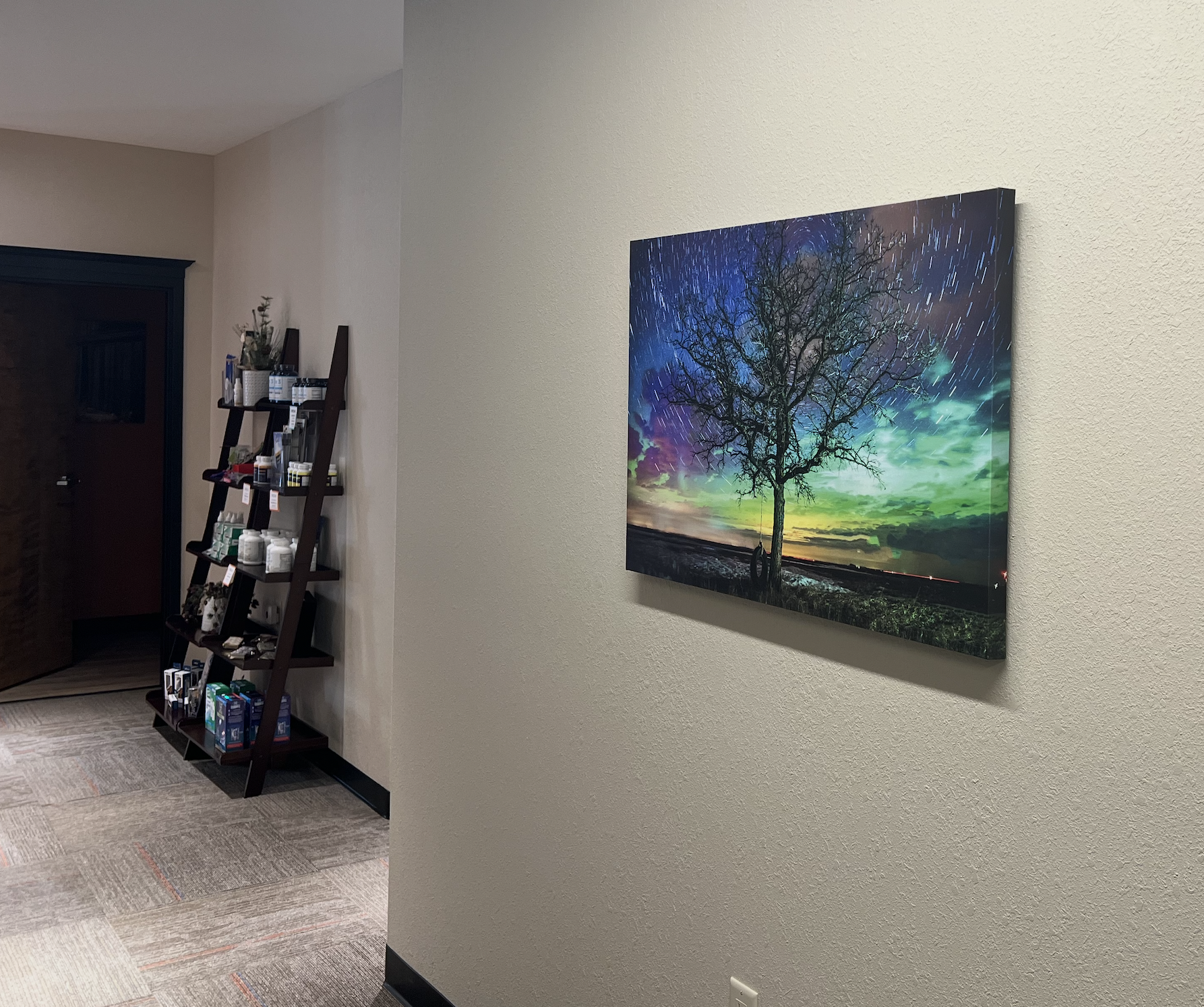
In addition, even office décor can provide a feeling of calm. For example, we have large canvas prints by local photographers of the different seasons and the northern lights. The staff rotates the pictures around the office every few months as a calming exercise.
Other Ways to Instill Calm
In my practice, we also experiment with aromatherapy using essential oil diffusers in staff-centric areas of the clinic. The staff often choose eucalyptus-based scents for a sense of calm.
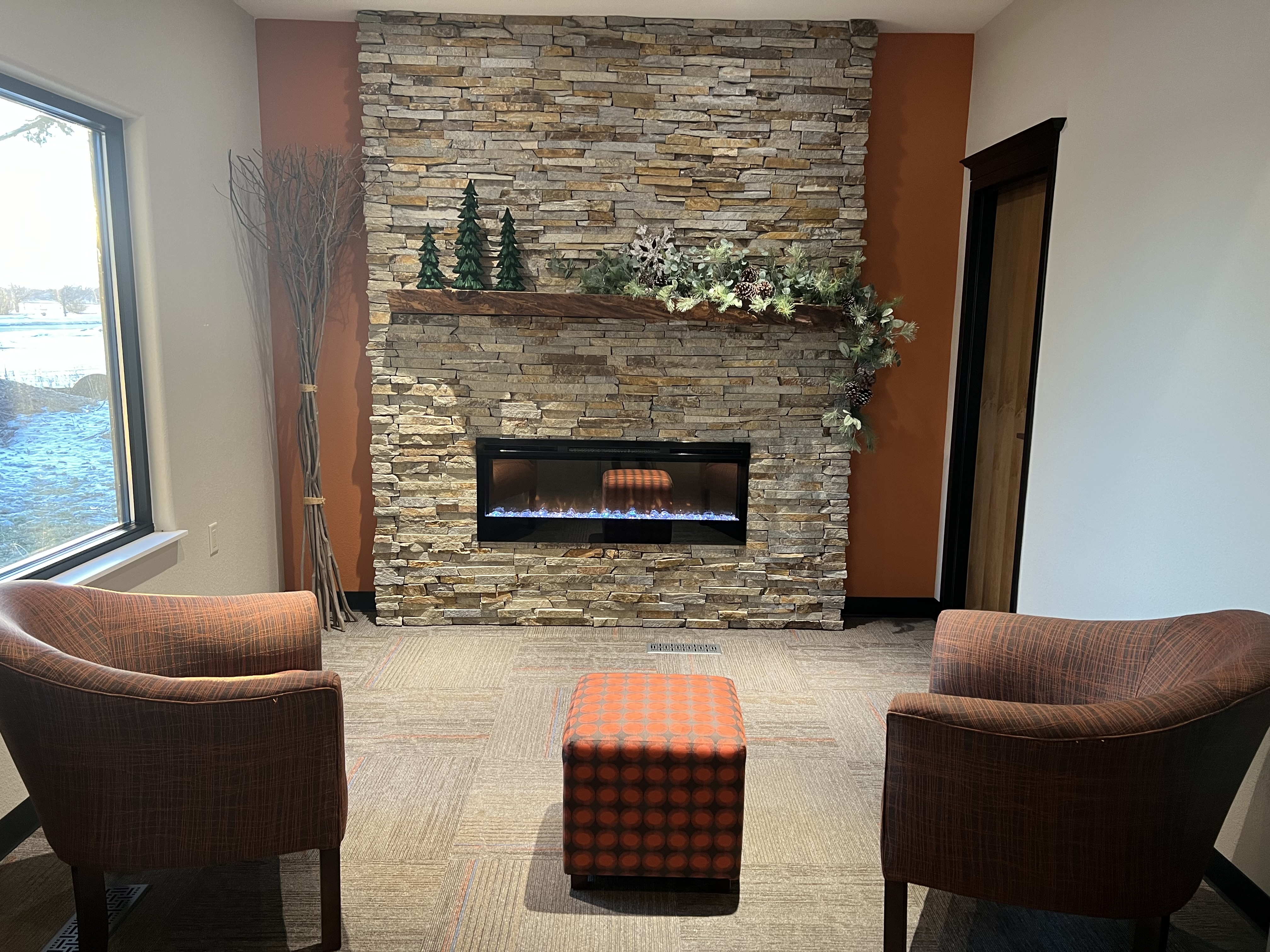
Another way we have tried to create a calming atmosphere is by adding a fireplace to create a feeling of peace and coziness during our most recent remodel of both of our locations.
Outside of our practice, I know of offices that have bird feeders strategically placed by their main window to instill a sense of calm. I also know of a dental office that has a picnic table outside of their office for staff to use during their breaks. Also, my kids’ orthodontist has a massive saltwater fish tank in their waiting room to create calm.
Managing the Environment
Leadership isn’t just about managing people. It’s about managing the conditions that bring out the best in people. When workplaces become overcrowded with tasks, noise, clutter, and urgency, creativity declines and stress increases. When leaders remain overwhelmed, empathy evaporates. The goal isn’t to escape the crowd forever, but rather to recognize when it’s time to change the environment.
In a world that moves so fast, I think that the leaders who will endure—and inspire—are those who know when to step out of the crowd, reconnect with the natural world, and return renewed, and ready to guide others through the chaos. OM
References
- Shuda Q, Bougoulias ME, Kass R. Effect of nature exposure on perceived and physiologic stress: A systematic review. Complement Ther Med. 2020;53:102514. doi:10.1016/j.ctim.2020.102514
- Robles KE, Roberts M, Viengkham C, et al. Aesthetics and psychological effects of fractal based design. Front Psychol. 2021;12:699962. doi:10.3389/fpsyg.2021.699962
- Taylor RP. Reduction of physiological stress using fractal art and architecture. Leonardo. 2006;39(3):245-251. doi:10.1162/leon.2006.39.3.245